

I’m Eddie, and I’ve been crawling through ductwork in AZ homes for over 20 years. In that time, I’ve seen a lot of homeowners replace a perfectly good dryer because it “stopped working right” — when the real problem was never the machine. It was the Dryer Vent Route Inspection that nobody thought to do. The route that hot, lint-loaded air travels from your drum to the outside wall? That route is everything. Get it wrong, and the best dryer on the market will still leave your clothes damp, run your APS bill up, and — worst case — start a fire while your family is asleep.
The Route Is the System
Most people think about the dryer. Almost nobody thinks about the duct behind it. But consider what that duct does: it carries hot, humid, lint-filled air from inside your home to the exterior vent cap — sometimes through 15, 20, or 25 feet of twisting, turning, occasionally sagging flex duct stuffed behind a wall or running through a Phoenix attic that hits 150°F in July. Near neighborhoods like Arcadia or along the Camelback corridor, we see homes where the laundry room is tucked deep into the floorplan, and the vent route involves two or three 90-degree elbows before it ever reaches daylight. Every bend, every foot of length, every low spot where lint settles — that’s resistance. And resistance means heat buildup, longer dry times, and a growing fire risk.
If your dryer is taking two cycles to finish one load, the route is almost always the first thing to investigate. We published a detailed look at exactly that problem — why your dryer takes two full cycles to dry one load — and the answer is rarely the dryer itself.
What a Proper Dryer Vent Route Inspection Actually Looks At
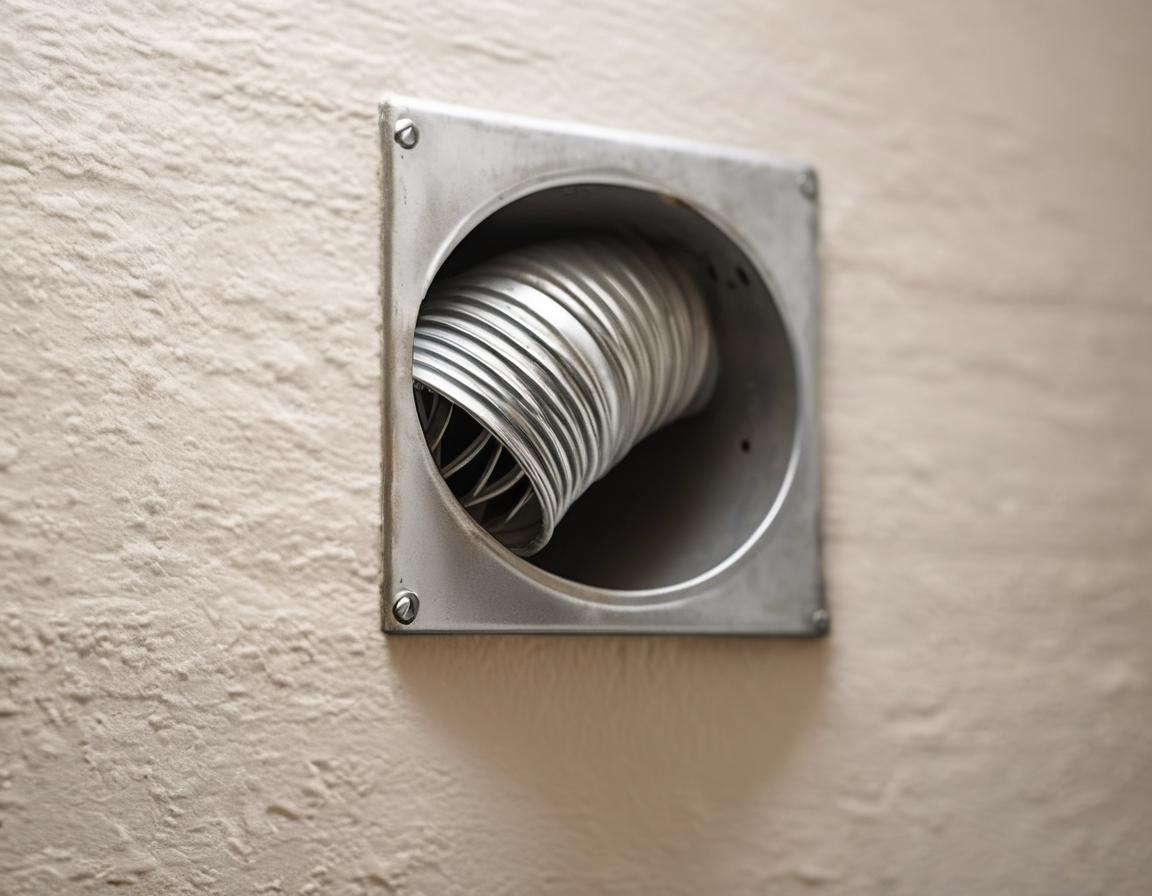
A real inspection isn’t a guy pulling the dryer out, glancing at the flex connection, and calling it good. Here’s what we actually check:
- Total run length — code caps rigid metal duct at 25 feet equivalent, with deductions for each elbow. Many homes in Phoenix, AZ exceed this without anyone knowing.
- Number and angle of elbows — a 90-degree elbow counts as roughly 5 feet of equivalent length. Stack three of them and you’ve already used 15 feet of your allowance before the duct even moves horizontally.
- Duct material — foil accordion flex is not code-compliant for concealed runs. We still find it constantly, especially in older Gilbert and Chandler tract homes.
- Kinks and low spots — a kinked dryer duct is arguably more dangerous than a long one, because it creates a near-complete blockage in one concentrated spot. We explain why in detail here: a kinked dryer duct is more dangerous than a long one.
- The exterior termination cap — bird nests, damaged flaps, and builder-grade plastic caps that crumble in Arizona heat are all common. If outside air can get back in, so can pests and moisture.
“The dryer vent route is the one system in your home that gets hotter the more neglected it becomes — and it’s hidden inside the wall the whole time.”
Long Routes vs. Kinked Routes: How They Compare

| Issue | Primary Risk | Warning Signs |
|---|---|---|
| Excessive run length | Lint accumulation, longer dry times | Clothes damp after full cycle, high energy bills |
| Kinked or crushed duct | Near-total airflow blockage, fire hazard | Dryer very hot to touch, burning smell |
| Too many elbows | Lint trapping at bends, reduced flow | Musty laundry smell, excessive drying time |
| Wrong duct material | Collapse, non-compliance, pest entry | Visible sagging, accordion flex behind dryer |
Homes near Desert Ridge Marketplace in Phoenix or out in the newer subdivisions of Gilbert often have laundry rooms positioned for aesthetic flow rather than vent efficiency. The builder ran the duct wherever it fit. Nobody inspected it at move-in, and nobody has looked at it since.
The U.S. Fire Administration reports that dryers cause roughly 2,900 home fires per year, and failure to clean the vent system is the leading factor. That’s not a scare tactic — that’s a maintenance problem with a straightforward solution.
It’s also worth knowing whether your dryer vent installation actually meets code — because in Maricopa County, a lot of them don’t, and the homeowner is the last to find out.
What We Do When the Route Is the Problem
If a Dryer Vent Route Inspection reveals the route is non-compliant or unsafe, we don’t just clean what’s there and hand you an invoice. We explain exactly what we found — in plain language, not technician-speak — and walk you through the options. Sometimes it’s a simple reroute. Sometimes it’s replacing a section of foil flex with rigid metal. Occasionally, on older Paradise Valley or Scottsdale custom homes, the duct was buried in a wall that was never meant to be accessed, and we have to get creative.
What we won’t do is tell you everything’s fine when it isn’t, or upsell you on a cleaning when what you actually need is a duct replacement. If you want to understand what that decision looks like, we’ve written about when it’s time to replace your dryer duct entirely.
We are a family business. My name is on the work. If something isn’t right, you call the same number and get the same people — not a 1-800 dispatch line and a different crew. That matters to us as much as it matters to you.
If you’re in Phoenix, AZ or anywhere across Phoenix, AZ and you haven’t had a professional dryer vent inspection since you moved in, it’s time. Call Pure Air Service at (623) 552-3176 — we’ll tell you exactly what’s going on, and we won’t waste your afternoon doing it.
Some content on this site is AI-assisted and may not reflect exact current details — please verify with Pure Air Service at (623) 552-3176. Learn more.