
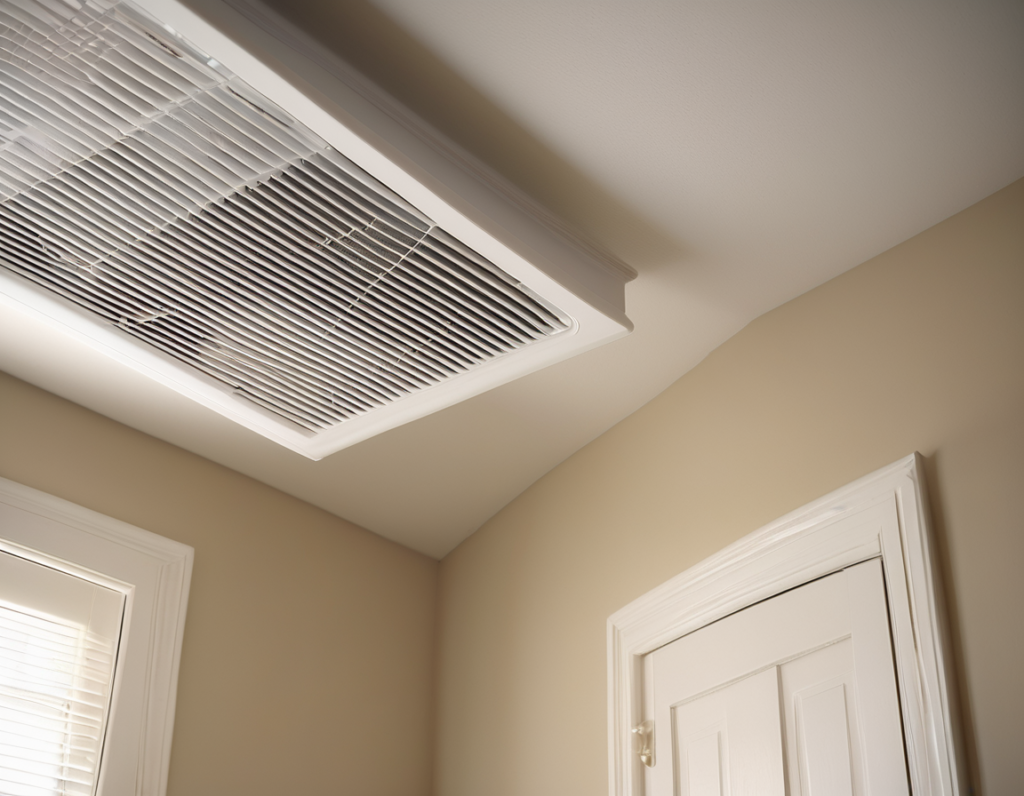
I’m Eddie, and after two decades crawling through attics in Scottsdale, Paradise Valley, Phoenix, Chandler, and Gilbert, I can tell you this: a Register Barely Blowing Air is one of the most common complaints we hear — and it almost never has just one cause. Homeowners call us in July when the master bedroom feels like a sauna compared to the living room, or in spring when the allergies suddenly get worse and someone finally thinks to look at the vents. Nine times out of ten, the answer is sitting right there in the ductwork. Let’s go through what we actually find.
The Most Likely Culprits Behind Weak Airflow
Weak airflow from a register almost always traces back to one of four things. I’ve seen all of them in homes across Paradise Valley, Gilbert, and everywhere in between. Here’s the short list:
- A partially blocked air duct — debris, built-up dust, or even a pest nest restricting flow at some point in the run
- Collapsed or kinked flexible ductwork — the flimsy flex duct that builders love to use can crimp, sag, or fully collapse over time
- A disconnected or leaking duct joint — air is escaping into your attic instead of reaching the room
- An HVAC airflow balancing problem — the system was never properly balanced for your home’s layout, so some rooms win and some lose
Before you assume the worst, know that a look at what the inside of your ductwork actually looks like after years of use would probably answer your question faster than any diagnostic tool. It’s not pretty. It’s also not something most homeowners ever see — which is exactly why problems go unnoticed for years.
Collapsed Ductwork: The Silent Airflow Killer

This is the one that gets people. Arizona homes — especially tract builds in Chandler and Gilbert — were built fast. The flexible duct used to connect your main trunk lines to individual registers is cheap, light, and surprisingly fragile. Over time, it sags between supports. Sometimes it gets stepped on during attic access for other work. Sometimes it was installed too long and coils up like a garden hose. Any of those conditions creates what I’d call collapsed ductwork symptoms: one room that’s noticeably hotter than the rest, a register that barely moves air even when the system is running hard, and an APS bill that keeps climbing for no obvious reason.
If your home was built in the 1990s or early 2000s, this is worth investigating seriously. We’ve written before about builder-grade ductwork problems in Arizona tract homes — the short version is that what came standard was never designed to last 20+ years in a desert attic that hits 160°F in July.
The Partially Blocked Air Duct You Can’t See From the Register
Here’s the thing about a partially blocked air duct: the register itself looks perfectly normal. The grille is clean. The damper is open. But somewhere upstream — in the wall cavity, behind the air handler, or deep in a trunk line — something is cutting the flow. It might be years of compacted dust and debris. In older Phoenix homes near South Mountain, we sometimes find insulation that migrated into the duct through a failed joint. We’ve pulled out things I won’t describe here (let’s just say Arizona has a lot of wildlife that enjoys a warm duct in winter).
The EPA guidance on improving indoor air quality through HVAC maintenance specifically points to duct obstructions as a contributor to poor indoor air — which matters a lot when you’ve got kids with asthma or elderly parents at home. If you’ve noticed that your house is still dusty even right after you clean it, a partial blockage circulating debris through the system is a very real possibility.
If one register is weak and the rest of the house feels fine, start at the duct run for that room — not the air handler. The problem is almost always local, not system-wide.
— Eddie, Pure Air Service
Quick Comparison: Common Causes vs. What You’ll Notice
| Root Cause | What You Notice at the Register | Other Clues |
|---|---|---|
| Partially blocked air duct | Weak, reduced airflow; may feel warmer than expected | Dust on nearby surfaces, higher utility bills |
| Collapsed or kinked flex duct | Near-zero airflow; register barely blows at all | One room significantly hotter; system running constantly |
| Disconnected duct joint | Weak airflow; sometimes a musty or dusty smell from the register | Attic feels unusually cool/warm; APS bill spikes |
| HVAC airflow balancing issue | Consistent weak flow; dampers may be incorrectly set | Multiple rooms affected; new since system was serviced |
HVAC Airflow Balancing: Often Overlooked, Always Worth Fixing
Not every weak register is a dirty or damaged duct. Sometimes the system was never balanced correctly after installation — or it got thrown off when someone added or modified rooms. HVAC airflow balancing is the process of adjusting dampers and measuring actual delivery at each register to make sure every room gets its share. Near Kierland Commons in Scottsdale or in the newer subdivisions around San Tan Village in Gilbert, we see a lot of homes where one wing was added or reconfigured and nobody ever rebalanced the system afterward. The result is exactly what you’re describing: one room that freezes while another barely gets conditioned air.
Knowing what the technician checks during a professional duct cleaning visit can help you understand why a thorough inspection covers more than just the duct surfaces — airflow, pressure, and register delivery are all part of a complete picture. And if you haven’t had the system looked at in a few years, what actually happens inside your air ducts after 3 years in an Arizona home might be the nudge you need.
What We Do When We Find These Problems
We don’t just clean and leave. When we find a collapsed flex duct, we replace it — we don’t tape it and hope. When we find a disconnected joint bleeding conditioned air into a 160°F attic, we seal it properly. When airflow balancing is off, we adjust and document. Our professional HVAC airflow balancing and duct repair service exists specifically because cleaning alone doesn’t fix a damaged system — and we’d rather tell you that upfront than have you call back in August wondering why your bill is still high. That’s the difference between a family business with a reputation to protect and a franchise crew that’s on to the next zip code before your dust settles.
If you want to start with a full cleaning and inspection, our air duct cleaning service is the right first step. We’ll show you exactly what we find — photos, documentation, plain English — and we won’t recommend repairs you don’t need. That’s a promise, not a marketing line.
Serving homeowners across Phoenix, Chandler, Scottsdale, and surrounding Phoenix, AZ communities — if your registers are barely moving air this season, don’t wait for the next APS bill to confirm what you already suspect. Call Pure Air Service at (623) 552-3176 and let’s figure out what’s actually going on.
Some content on this site is AI-assisted and may not reflect exact current details — please verify with Pure Air Service at (623) 552-3176. Learn more.