I’m Adam, and after two decades crawling through ductwork across Maricopa County, I can tell you this: most dryer vent problems I see didn’t start at the last cleaning. They built up quietly between cleanings, one load at a time. Knowing How to Maintain Dryer Between Cleanings isn’t complicated — but it does require consistency. These habits take maybe five minutes a month. A house fire or a wrecked dryer motor takes a lot longer to recover from.
Why Between-Cleaning Habits Actually Matter
Here in Phoenix, AZ, the desert heat is no joke — and your dryer is already working against it. When lint starts restricting airflow, that dryer runs hotter and longer than it should. You’ve seen the APS bill in July. You don’t need the dryer adding to the problem. Beyond the energy cost, the U.S. Fire Administration estimates dryers cause roughly 2,900 home fires annually — and lint buildup is the leading culprit. That’s not a scare tactic. That’s just the number.
If you’ve ever noticed clothes taking two cycles to dry, or felt the top of your dryer running unusually hot, your vent is probably working harder than it should. Read more about what happens when things go further wrong in our guide on when it’s time to replace your dryer duct entirely instead of just cleaning it.
How to Maintain Dryer Between Cleanings: Your Monthly Dryer Vent Safety Checklist
- Clean the lint trap after every single load. Yes, every one. This is the easiest thing you can do and the most skipped. A clogged trap pushes lint deeper into the duct — exactly where you don’t want it.
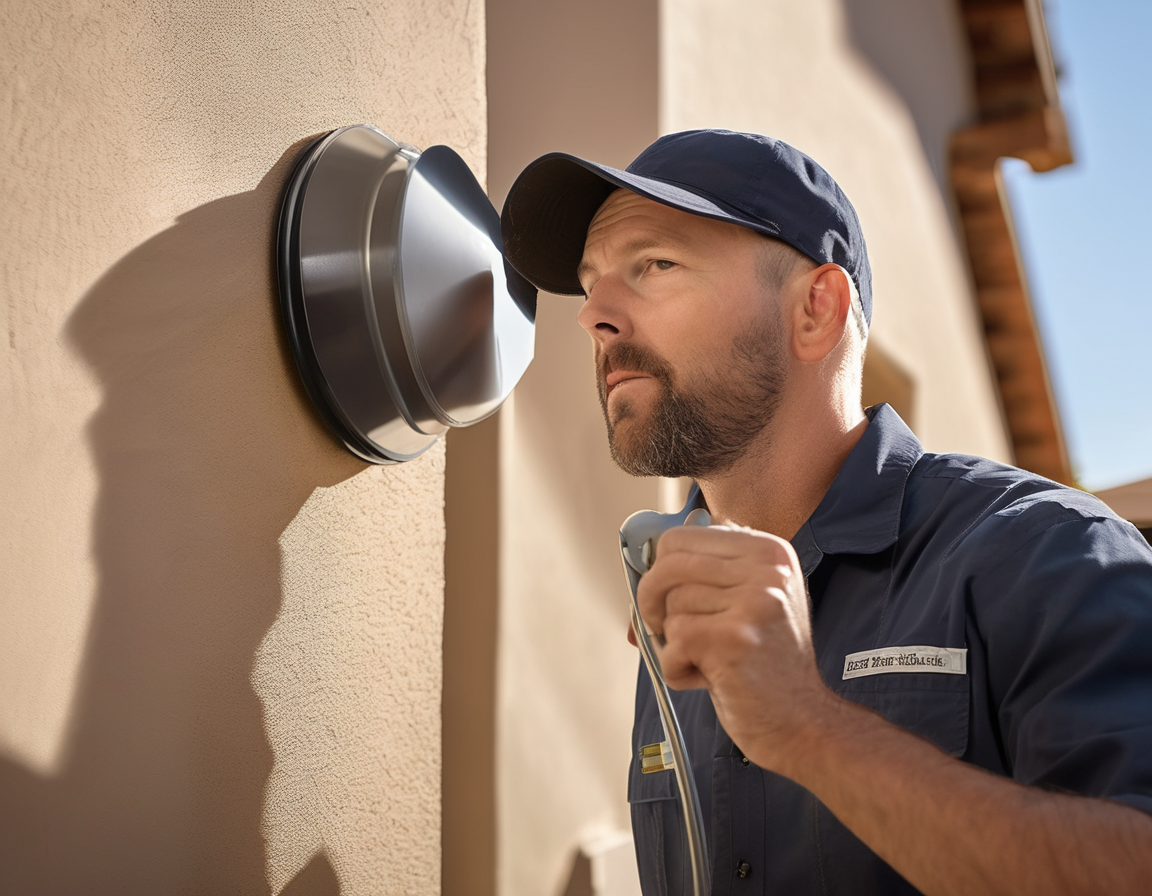
- Check the exterior vent flap monthly. Step outside (I know, it’s Phoenix — wait until after 6 p.m.) and look at the vent cap on your exterior wall. Make sure the flap opens freely when the dryer runs. A stuck or bird-nested flap means zero airflow, and that’s a problem fast.
- Feel the exhaust airflow. Hold your hand near the outside vent while the dryer is running. You should feel strong, warm air. Weak or cool airflow means restriction somewhere in the line.
- Wipe down the lint trap housing every month. Use a long, flexible brush to pull any lint from the slot itself — not just the screen. That interior pocket accumulates more than most homeowners realize.
- Don’t overload the dryer. Bigger loads = more moisture = more lint passing through faster. Smaller loads dry quicker and put less strain on the vent path.
- Use low heat for synthetics. High heat melts synthetic fibers into a sticky film inside the duct. It doesn’t just collect lint — it holds it.
“The lint trap is not the whole story. It catches maybe 75% of what comes off your clothes. The other 25% is making its way down the duct right now.”
— Adam, Pure Air Service
Signs You Shouldn’t Wait for the Next Scheduled Cleaning
Even with good habits, some situations call for earlier attention. If you notice any of these, don’t wait — call us:
- Clothes are still damp after a full cycle
- A burning or musty smell during drying (that one especially — stop the dryer and call)
- The laundry room feels noticeably hotter than the rest of the house while the dryer runs
- The dryer exterior is hot to the touch
That musty smell isn’t always the vent — sometimes it’s the drum itself. We cover that in detail in our post on why your laundry smells musty right out of the dryer. Worth a read if that’s happening to you.
Homeowners around the Biltmore area and near Camelback Road in Phoenix tend to have longer duct runs — sometimes with extra elbows — because of how those properties are laid out. Longer runs need a little more attention between visits. If you’re not sure about yours, we’re happy to take a look and give you an honest answer.
What to Do Before Your Pro Cleaning Appointment
A little prep on your end makes the technician’s job cleaner and faster — and gets you better results from our dryer vent cleaning package.
- Run the dryer for about ten minutes before the appointment — it loosens compacted lint
- Clear the area around the dryer so the tech can access the back connection easily
- Note anything unusual you’ve observed: smells, drying times, error codes
- Know where your exterior vent cap is located — saves everyone time
These small steps mean we spend more time cleaning and less time problem-solving logistics. We serve homeowners across Phoenix, AZ and the surrounding areas, and we always show up ready to work — not to upsell you on things you don’t need.
If breathing quality is also on your mind — and in Phoenix summers, it should be — our post on waking up congested every morning and what your home’s air system might be doing is worth five minutes of your time.
You’re already doing the right thing by thinking about this. Keep the monthly habits, stay alert to the warning signs, and let Pure Air Service handle the deep cleaning when it’s time. Call us at (623) 552-3176 — we’ll give you a straight answer and a fair quote, no pressure.
Some content on this site is AI-assisted and may not reflect exact current details — please verify with Pure Air Service at (623) 552-3176. Learn more.