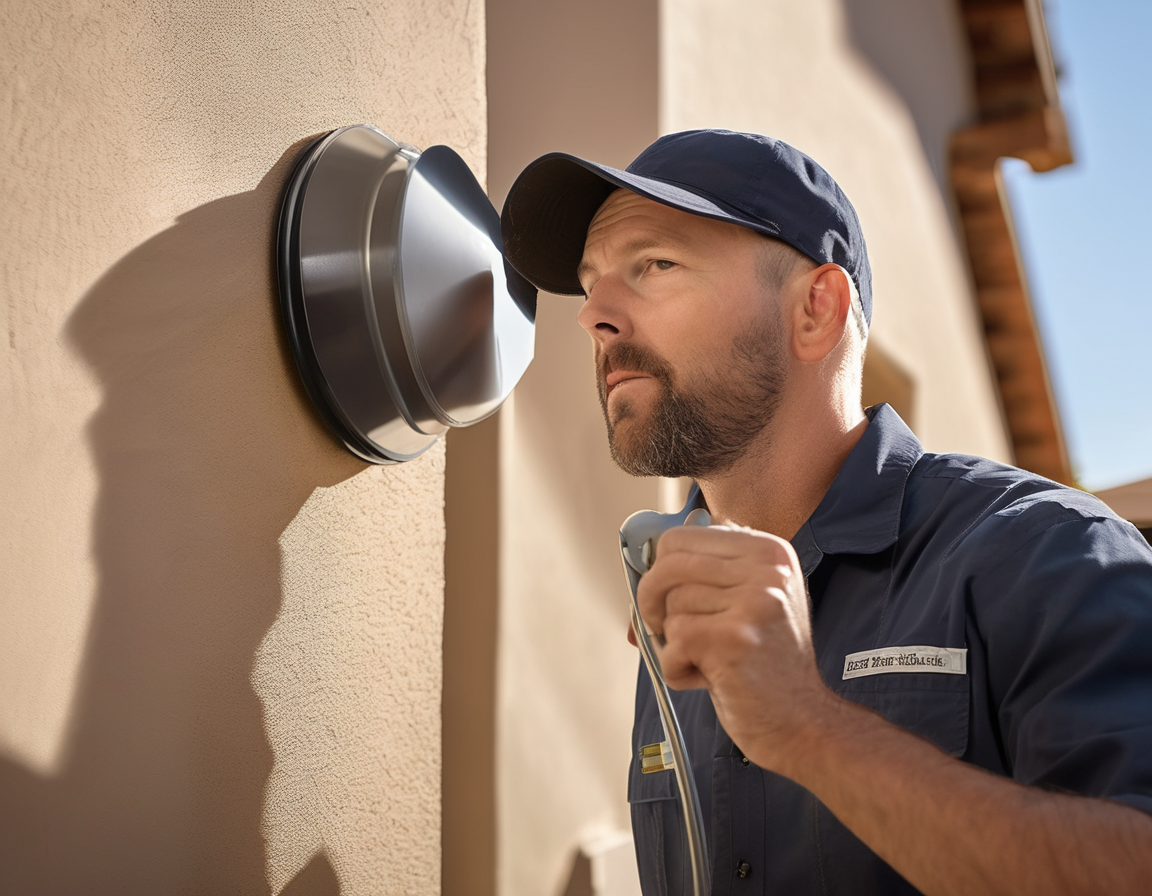
I’m Adam, and after 20-plus years crawling through ductwork across Maricopa County, I can tell you this: most homeowners think an Annual Dryer Vent Inspection is basically a glorified lint trap check. It isn’t. Not even close. What we’re actually doing when we show up at your door — whether you’re in Phoenix, AZ near the Biltmore corridor or over in Chandler off Dobson — is a systematic diagnostic that lint is just the first chapter of.
What a Dryer Vent Technician Is Actually Inspecting
Yes, we remove lint. But a qualified dryer vent technician who’s worth your time is also looking at four things that most discount crews skip entirely:
- Duct material and condition. Flexible foil or plastic accordion duct — the cheap stuff — is banned by most building codes for a reason. It traps lint at every ridge, kinks easily, and turns into a chimney fire waiting for the right Tuesday night. We check what’s actually running behind your wall. If you want to understand when it’s beyond saving, our guide on when to replace your dryer duct entirely instead of just cleaning it walks you through the signs.
- Duct path and total run length. Every 90-degree elbow in your duct path is equivalent to adding several feet of straight run. The longer and more twisted the path, the harder your dryer labors. In older Phoenix and Scottsdale homes — especially those built in the late ’80s and ’90s — I regularly find runs that exceed code limits by a significant margin.
- The exterior termination cap. This is the flap on the outside of your house. Bird nests, wasp activity, desert dust buildup, and bent louvers are shockingly common across the Valley — particularly in neighborhoods near South Mountain or along the Canal paths in Gilbert. A stuck-closed cap is basically a full blockage your dryer fights against every single cycle.
- Dryer vent restriction measurement. This is the one most people have never heard of. We use airflow measurement tools to compare what’s coming out of the dryer against what’s exiting the termination cap. A significant pressure drop tells us where the restriction lives — and how severe it is — before we even start cleaning. It’s the difference between guessing and knowing.
A stuck exterior cap is a full blockage. Your dryer is fighting it every single load — and you’re paying for every BTU of that fight on your APS bill.
The Annual Dryer Vent Inspection and Your Dryer Vent Maintenance Schedule
So how often should this happen? The standard dryer vent maintenance schedule recommended by the National Fire Protection Association is once per year for most households. If you’re running six or more loads a week — common for families with kids — or if you have pets, bump that to every eight months. The lint accumulation rate in high-usage homes is genuinely surprising, even to people who clean their trap religiously after every load.
Between professional visits, there are simple habits that extend how long your system stays clear. We put together a practical list in our post on simple habits that keep your dryer vent safer all year — worth bookmarking.
Why This Matters More Than You Might Think
If your laundry is coming out hotter than it used to, or cycles are running longer for the same load, that’s restriction. If you’ve noticed a faint musty smell on clothes right out of the dryer, read our breakdown of why laundry smells musty right out of the dryer — it’s not always the vent, but it’s often connected.
And for families in Phoenix, AZ with kids who have asthma or anyone with allergy symptoms that never quite go away, a neglected dryer vent is one piece of a larger indoor air picture. If mornings feel worse than they should, our article on waking up congested every morning and what your air system might be doing is worth a few minutes of your time.
We serve homeowners across Phoenix, Scottsdale, Paradise Valley, Chandler, and beyond — and we show up as the same face, not a rotating crew from a call center. We document what we find, show you the before and after, and don’t invent problems you don’t have. That’s the whole job.
When you’re ready to actually know what’s happening inside your vent — not just guess — call Pure Air Service at (623) 552-3176 and get a straight answer from someone who’s seen it all. We’ll schedule your inspection, give you an honest assessment, and leave your home cleaner than we found it. Every single time.
Some content on this site is AI-assisted and may not reflect exact current details — please verify with Pure Air Service at (623) 552-3176. Learn more.