
If you’ve just wrapped up a kitchen remodel, bathroom addition, or whole-room build-out, you already know the mess contractors leave behind. What you may not realize is that a significant share of that dust — drywall particulates, silica from tile cutting, insulation fibers, sawdust — got pulled straight into your duct system every time the HVAC ran during construction. Understanding When to Clean Air Ducts After Renovation timing is the single most important step you can take for your family’s health and your equipment’s lifespan once the crew packs up and leaves.
What a Renovation Actually Does to Your Duct System
Here’s what most contractors won’t tell you when they leave: the dust doesn’t go with them. Drywall sanding, tile cutting, and insulation removal launch fine particulates into the air. Your HVAC system, almost certainly running during the project, acts like a vacuum with nowhere to empty itself — pulling that debris into the return vents and depositing it throughout the ductwork.
Drywall dust is especially problematic. It’s fine enough to bypass a standard HVAC filter, abrasive enough to coat duct walls, and light enough to re-suspend into your living space every time the system cycles on. If anyone in your home has asthma, allergies, or respiratory sensitivities, this isn’t a minor inconvenience — it compounds every day you wait. According to the EPA’s indoor air quality guidelines, construction particulates are among the most irritating common indoor air pollutants, and improving ventilation alone won’t remove what’s already embedded in your ducts.
When to Clean Air Ducts After Renovation: Exactly When to Schedule It

This is the question we get most often, and here’s a straight answer — organized by project type.
| Renovation Type | Recommended Wait After Completion | Notes |
|---|---|---|
| Drywall work, texturing, or plastering | 1–2 weeks after final cleanup | Let dust fully settle so we capture the full load |
| Flooring installation (tile, hardwood) | 1 week after completion | Tile cutting generates silica dust — don’t skip this one |
| Full kitchen or bathroom remodel | 2 weeks after final walkthrough | Multiple trades mean multiple dust sources |
| Addition or new room build-out | 2–3 weeks after punch list | New ductwork connections may need inspection too |
| Painting only (no demo) | Optional, within 30 days | Paint fumes bind to dust already coating duct walls |
The one-to-two-week wait isn’t about delaying your cleaner air — it’s so residual airborne dust has time to settle somewhere we can actually capture it. Come in on day two and we clean what’s there now; whatever’s still drifting gets left behind.
“The renovation is finished. The dust is not.”
— Twenty years cleaning ductwork in Phoenix, AZ and across AZ
Your HVAC Filter During Construction: What It Can and Cannot Do

Upgrading to a MERV-13 filter during a remodel helps, but no filter catches everything — and most renovation projects generate particulates far faster than any filter can trap them. A clogged filter also restricts airflow, straining the blower motor and pulling debris around the filter edges.
Best practice during construction: seal supply and return vents with plastic sheeting, minimize system runtime, and change filters at least every two weeks. But even perfect filter discipline during the project doesn’t eliminate the need for duct cleaning afterward. Filters protect the system during the work. Duct cleaning restores it after. If you’re wondering why your house is still dusty even after you’ve cleaned it, contaminated ducts recirculating construction debris are almost always the reason.
The Real Cost of Waiting Too Long
We understand post-renovation exhaustion. The budget stretched, the timeline stretched, and the last thing you want is another service call. But skipping or delaying duct cleaning after construction carries real costs:
- Higher utility bills. Debris-coated ducts restrict airflow. Your system runs longer cycles trying to hit the thermostat setpoint — in Phoenix, AZ summers, that’s meaningful money on your energy bill every single month.
- Worsening allergy and asthma symptoms. Construction particulates are some of the most irritating indoor air pollutants. If your kids are waking up congested or sneezing constantly, this is likely why.
- Faster HVAC component wear. Dust-coated coils, overtaxed blower motors, filters clogging at twice the normal rate — all of this shortens equipment life, especially in AZ where systems run nearly year-round.
- Harder cleaning later. Debris that sits in ducts for months gets damp from condensation cycles and packs down. What would have been a routine job becomes a more involved one. Waiting always costs more.
What the Cleaning Process Looks Like After a Renovation
Post-renovation duct cleaning isn’t the same as a routine visit on a home that hasn’t seen construction in years. Here’s what we do differently:
- Visual inspection first. We check every accessible register and return, the air handler compartment, and the filter housing. If the filter looks like it survived a sandstorm, we already know what’s in the ducts.
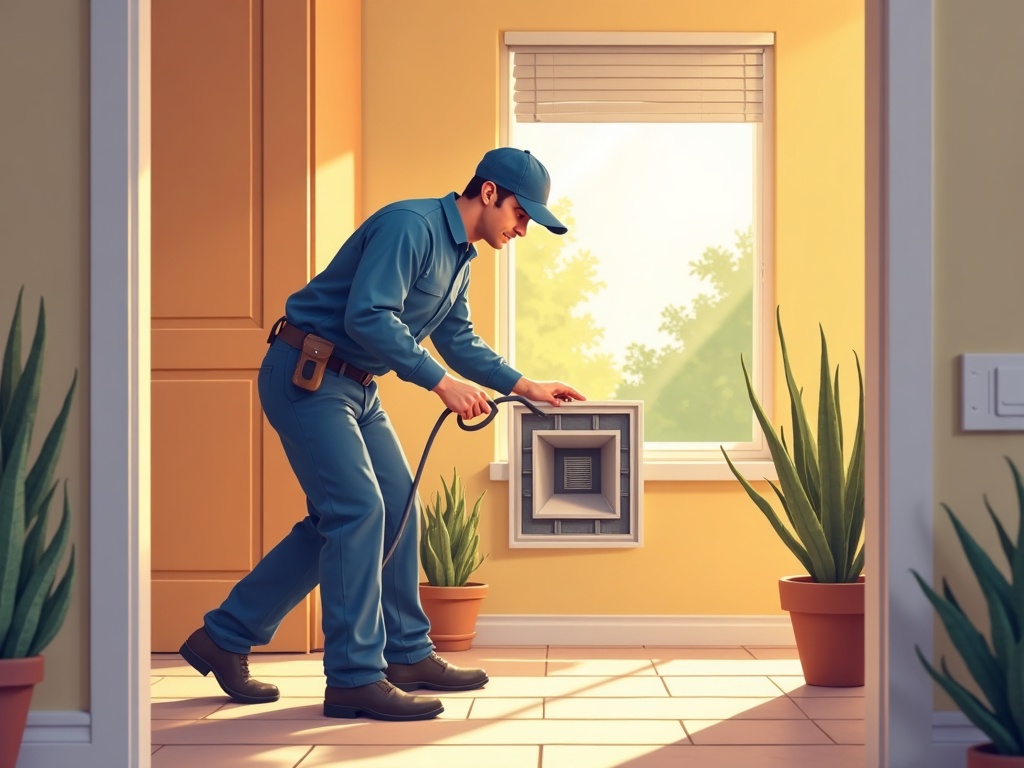
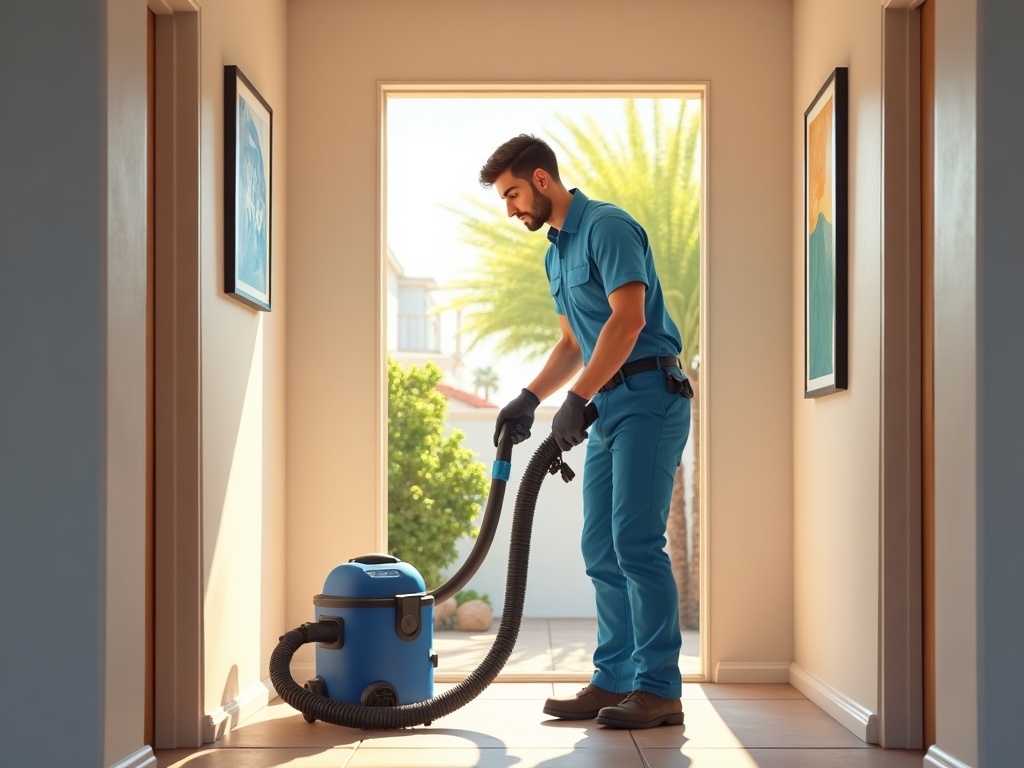
- Negative pressure setup. We connect a high-powered vacuum collection unit to the main trunk line so everything we dislodge moves toward collection — not back into your home.
- Mechanical agitation at every branch. Every supply and return branch gets worked from the register end with brushes or air whips designed to break loose compacted debris, including fine drywall dust clinging to duct walls.
- Air handler and coil check. Post-renovation, the blower wheel and evaporator coil almost always have debris on them. We document what we find and explain it in plain language.
- Final verification. You see what came out. No mystery bags disappearing into a van.
We also inspect whether your ductwork held up during the renovation — contractors sometimes disturb connections in walls and ceilings without realizing it. Leaking ducts after a renovation can push conditioned air straight into your attic or wall cavities, and that’s money evaporating every day. If you want to know exactly what a technician evaluates on-site, here’s what gets checked during a professional duct cleaning visit.
Your renovation is done. Now let’s make sure the air in that beautiful new space is actually clean. Call Pure Air Service at (623) 552-3176 — we’ll tell you exactly what we find, explain everything without jargon, and get your home breathing right again.
Some content on this site is AI-assisted and may not reflect exact current details — please verify with Pure Air Service at (623) 552-3176. Learn more.